
Half a million dollars in hamster balls. What if you spotted a gap in a market that hadn’t changed in 50 years and turned it into a fast-growing product business while still in college?
That’s exactly what Ethan Haber did with Happy Habitats, a small pet products company he started as a sophomore at Wake Forest University.
While playing with his hamster Mooksie on campus, Ethan looked over and saw someone walking a dog.
The thought hit him: why can’t I walk my hamster? That simple question launched a product line now heading into 1,500 stores nationwide through a major big-box retail deal.
Ethan’s story covers everything from cold-emailing a design firm and navigating COVID shipping delays, to cracking Amazon and landing a mentorship with the founder of PetSmart — all from a niche that most people overlook.
Tune in to Episode 729 of the Side Hustle Show to learn:
- how to take an existing product and improve upon it to create a defensible business
- what it really takes to get your product into retail stores and online marketplaces
- why patents, packaging, and the right partners matter more than most first-time founders realize
Sponsors
- Indeed – Start hiring NOW with a $75 sponsored job credit to upgrade your job post!

- Quo (formerly OpenPhone) — Try it for free!
- Shopify — Sign up for a $1 per month trial!

- Gusto — Get 3 months free of the leading payroll, benefits, and HR provider for modern small businesses!

From Idea to Patent: Reinventing the Hamster Ball for Safety and Function
The original hamster ball has barely changed since it launched in the 1970s. Ethan saw that as an opportunity, not an obstacle.
The standard design has real problems:
- ventilation holes large enough to trap a hamster’s paw
- a quarter-turn friction lid that warps over time and can pop open mid-roll
- cheap plastic construction
His product line expanded to resolve these problems:
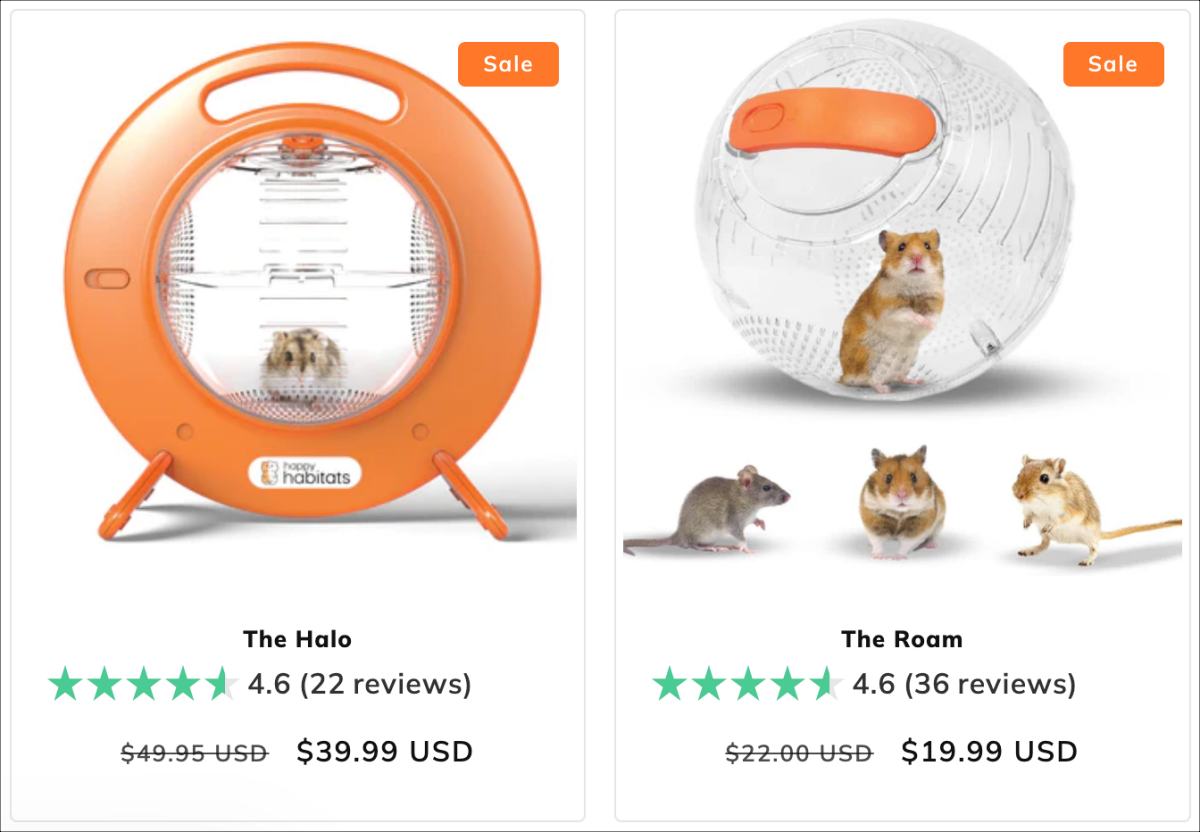
- Roam – addresses all of that with a two-millimeter paw-protection ventilation pattern and a two-step locking lid that keeps pets safely inside.
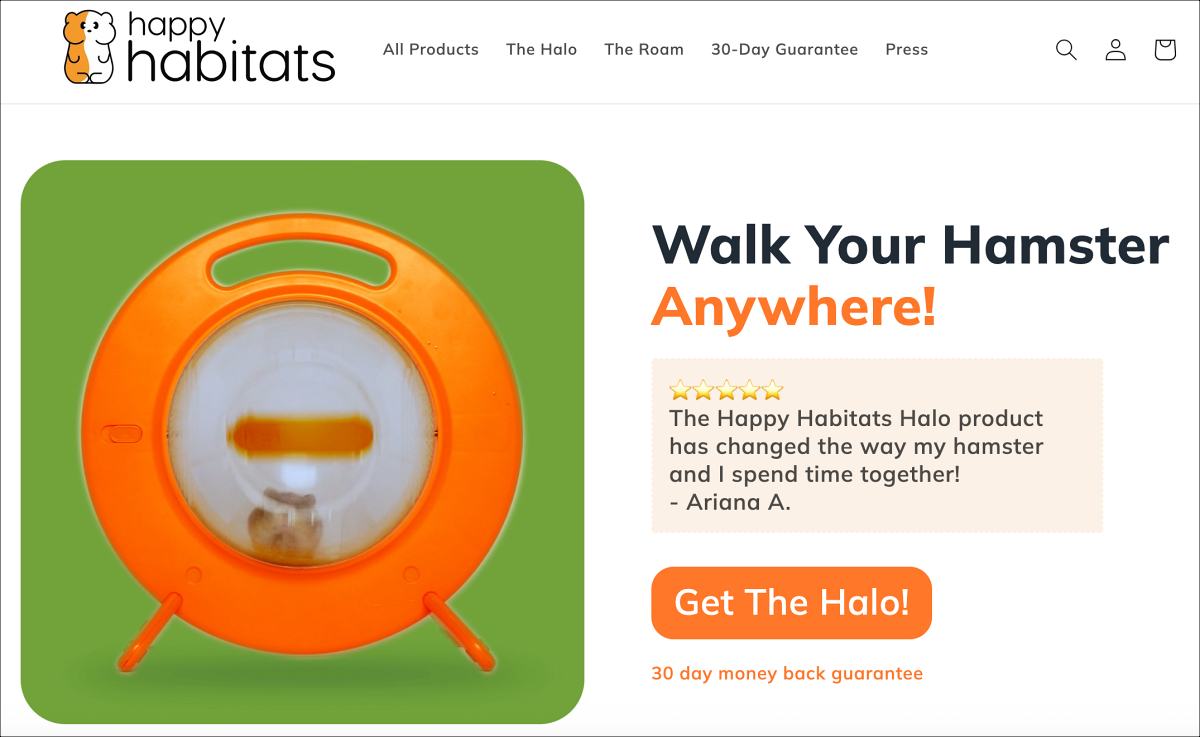
- Halo – is an orange ring that snaps onto the ball so you can carry it and actually walk your hamster.
- Burrow Bricks – is launching with the new big-box retail partner. Burrow Bricks are clear three-by-three plastic squares that snap together to create hides, mazes, and enclosures. Think LEGO for small animals.
Happy Habitats now holds two utility patents, both issued in 2025 — one in February and one in November.
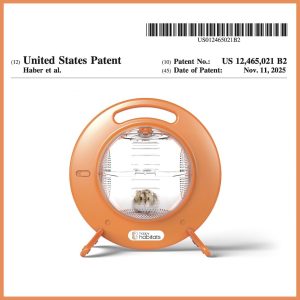
Ethan incorporated the company in October 2019 and filed provisional patents in 2021. The process took years, but the protection is significant. A utility patent covers function, not just form, which means competitors can’t legally replicate the core innovations.
As Ethan put it, if you capture market share in a niche space and a competitor wants to buy you out, your utility patent becomes very attractive because whoever buys you becomes the only one who can make the product.
How to Build a Product Business Through Strategic Partnerships
After coming up with the idea, Ethan joined an entrepreneurship incubator at Wake Forest that gave him early funding and helped him form his LLC.
He then cold-pitched his concept to P9 Design, a product design firm in Edgewater, New Jersey, known for working with major consumer brands like Honeywell, OXO, and S’well.
P9 Design agreed to come on board as an equity partner.
Today:
- Ethan, his father, and P9 Design each own a third of the business
- P9 contributed sweat equity (design + engineering)
- The relationship evolved into a consistent weekly collaboration
Ethan’s perspective on giving up equity: “Dollars are things you need now, but equity is what grows.” He noted that by the time most entrepreneurs sell a business, they’re down to owning roughly 7% anyway. Trading ownership for a world-class partner early is often worth it.
Manufacturing is handled in Mexico through a connection Ethan made via a speaker at his university incubator — a third-hand introduction that turned into a long-term production relationship.
The product molds themselves are made in China and shipped to the Mexican factory. That logistics chain caused some early headaches (more on that below), but the operation now runs bimonthly production cycles.
Startup Challenges: Manufacturing, Packaging, and Pricing Mistakes
Ethan jokes that “everything that could go wrong, did go wrong.” He wasn’t exaggerating.
- Manufacturing delays: Molds made in China were stuck outside the Port of Los Angeles for over 9 months during COVID, halting production entirely
- Packaging failure: A supplier switched to cheaper materials without approval, resulting in an entire damaged pallet
- Financial trade-offs: Ethan absorbed the loss to protect his relationship with the factory, which wasn’t at fault
- Pricing miscalculation: Initial costs didn’t account for distributor margins, limiting the business to direct sales
- Rising production costs: Manufacturing doubled from $5 to $10 per unit, forcing design compromises like removing magnets
The lesson carried into the Burrow Bricks launch: instead of designing within a budget and piling on features, Ethan flipped the approach.
Start with the ideal product, then engineer it to be as affordable to produce as possible.
Getting Into Retail: From Pet Supermarket to a Big-Box Deal
Before Amazon or their own website, Happy Habitats went straight to retail.
Their first partner was Pet Supermarket, a regional chain with 200+ stores in the Southeast. To land the deal, Ethan presented a full retail pitch deck covering:
- Costs
- Retail pricing
- Minimum order quantities
- Marketing co-ops
Pet Supermarket agreed to a test order, giving the brand its first real proof of concept. But early sales were slow — not because of the product, but because customers didn’t understand it.
The packaging was the problem.
A static image on the box couldn’t explain how the Halo worked. Shoppers saw it, but didn’t “get it.” Even after bringing on a second partner, Feeders Pet Supply (60+ stores in the Midwest), the issue remained.
The breakthrough came from one simple shift: make the product touchable.
What changed:
- The Roam was redesigned in packaging where the ball protrudes through the front panel, allowing customers to see and feel the ventilation pattern and locking mechanism
- The Halo moved to a clear clamshell with a finger opening, so shoppers could physically interact with the product
Once customers could engage with it directly, sales improved significantly.
The Roam now retails for $20 in stores and $25 on online marketplaces. The premium price is justified by its safety improvements and patent-backed design.
Trade shows became another key driver of retail growth. Ethan attended both industry and consumer events across cities like San Francisco, Pittsburgh, New Jersey, and New York — but he didn’t rely on foot traffic alone.
His approach was deliberate:
- Start outreach three months before the show
- Contact buyers via email, phone, and LinkedIn
- Schedule meetings in advance instead of hoping for walk-ups
The buyers everyone wants to meet are busy. Without a scheduled meeting, you’re just another booth.
To find the right people, Ethan built a targeted outreach list using CRM tools.
He focuses on roles like director of merchandising or buyer on LinkedIn, then uses Apollo to pull contact details — including personal emails, business emails, and phone numbers.
Amazon and Marketplace Strategy: Where Most Sales Come From
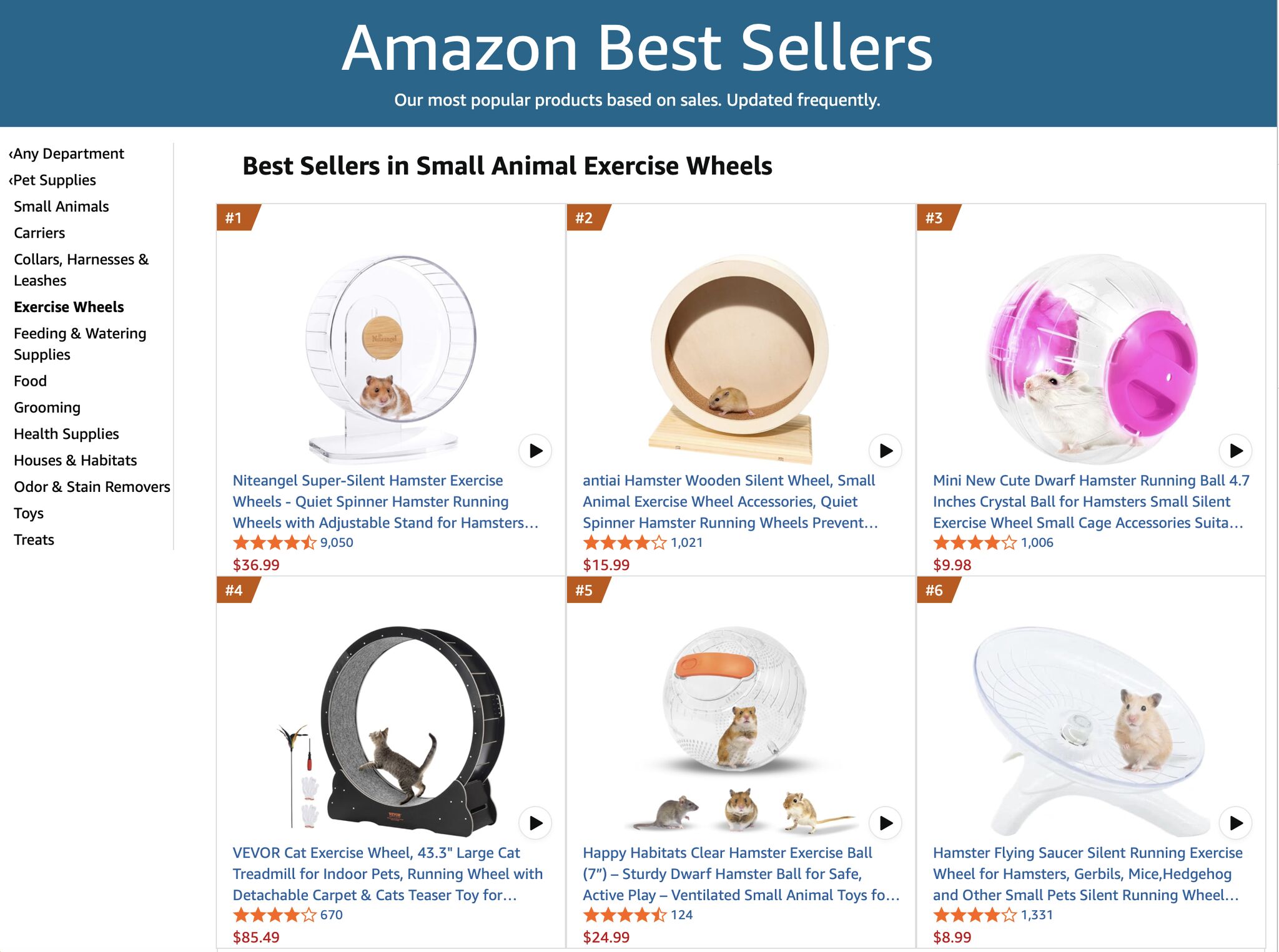
Happy Habitats didn’t start on Amazon, but it quickly became the main growth engine.
The brand launched on Amazon about 8 months after entering retail. Today, the business is roughly 60% direct-to-consumer and 40% wholesale. But here’s the key detail: almost all of that DTC revenue comes from marketplaces like Amazon, not the company’s own website.
Their first attempt at Amazon didn’t go well. With the wrong agency, they were spending $3 to generate $1 in sales. After switching to Marknology — an Amazon marketing agency — the economics flipped. Now, they spend $1 to make $3.
Marknology manages:
That shift didn’t just improve performance — it made the channel scalable.
Ethan’s advice when working with marketplace partners is simple: align incentives.
Structure your deal carefully:
- Avoid flat retainers where possible — agencies get paid regardless of results
- Push for commission-based models (typically 5–10%)
- Look for partners willing to share risk in exchange for upside
In their case, Marknology accepted a lower retainer in exchange for commission because they believed in the product.
Still, selling on Amazon comes at a cost.
What you’re paying for:
- 15% platform fee per sale
- Storage fees
- Shipping and fulfillment (FBA)
- Ongoing ad spend
To qualify for Prime and stay competitive, you’ll need Fulfilled by Amazon (FBA), which increases costs further. But the trade-off is access to buyers who are already ready to purchase.
That’s the real advantage.
Amazon isn’t just a platform — it’s a high-intent marketplace. Customers arrive with their credit cards out. Your own website, by comparison, has to work much harder to build trust and convert traffic.
Walmart Strategy and Scaling Beyond Amazon
Walmart adds another layer of complexity.
There are two ways to sell:
- Walmart 1P (walmart.com) – Walmart buys your product wholesale and sets the price — sometimes undercutting your Amazon listing
- Walmart Marketplace (3P) – You retain pricing control and sell directly through their platform
Ethan prioritizes Marketplace for now, while maintaining a relationship with Walmart 1P for long-term retail expansion into their 5,000 U.S. stores. Happy Habitats is also available on:
The results are starting to show.
In the last 30 days, Happy Habitats sold 671 units on Amazon — and Q1 2026 sales are already outperforming Q4 2025. The business has clearly crossed into a new phase of growth.
The Cold LinkedIn Message That Led to a PetSmart Mentorship
One of the biggest surprises for Ethan was realizing how accessible successful people actually are.
He sent a LinkedIn connection request to Jim Dougherty, the founder of PetSmart, with a short note — about 300 characters — asking for mentorship. A week or two later, Jim was calling back.
Ethan’s takeaway: “Anyone who is a successful entrepreneur has at one point been in your shoes.”
Most are more willing to share their experience than you’d expect. The only way to find out is to send the message.
A Day in the Life
Ethan’s day is about half sales and around 30% backend work — things like onboarding vendor partners, filling out retailer forms, and getting EDI set up.
EDI stands for electronic data interchange, a platform that lets businesses send and receive invoices.
It’s something you need in place if you want to sell to any store with a meaningful footprint. The rest is production coordination, marketing, and occasionally podcast interviews.
What’s Next for Ethan?
The personal milestone Ethan is most excited about: walking into the new big-box retail partner as a regular customer, pulling $30 cash out of his wallet, and buying his own product off the shelf.
Burrow Bricks launches there soon, going into 1,500 stores nationwide.
With Q1 2026 sales already beating Q4 2025, Ethan is looking ahead to the holiday season and continuing to expand across retail and marketplace channels.
Ethan’s #1 Tip for Side Hustle Nation
“Everyone is accessible. You miss 100% of the shots you don’t take.”
Episode Links
- Happy Habitats
- Happy Habitats on Amazon
- Happy Habitats on Chewy
- Happy Habitats on Walmart
- Happy Habitats on Tractor Supply Co.
- Happy Habitats on Pet Valu
- Happy Habitats on Bomgaars
- Happy Habitats on Petco
- Apollo (CRM / contact sourcing)
- P9 Design
- Honeywell
- OXO
- S’well
- Pet Supermarket
- Feeders Pet Supply
- Marknology
- Jim Dougherty
- PetSmart
Looking for More Side Hustle Help?
- Start Your Free $500 Challenge. My free 5-day email course shows you how to add $500 to your bottom line.
- Join the free Side Hustle Nation Community. The free Facebook group is the best place to connect with other side hustlers and get your questions answered.
- Download The Side Hustle Show. My free podcast shares how to make extra money with actionable weekly episodes.
The award-winning Side Hustle Show is the #1 side hustle podcast
with over 1,300 5-star ratings!

Listen in your favorite podcast app or directly in your browser.