 What if you could turn your social media following into a $300/day marketing machine without relying on ads or platform algorithms to pay you?
That’s exactly what financial educator Brian Feroldi has built at LongTermMindset.co.
He started by sharing investing content on Twitter back in 2019 and gradually built a funnel that now generates consistent daily revenue from digital products without a huge team or a big ad budget.
Brian is the bestselling author of Why Does the Stock Market Go Up? and has grown audiences of over 650k on Twitter/X and 200k+ on LinkedIn. But the real magic isn’t the follower count — it’s what he does with the attention once he has it.
Tune in to Episode 726 of the Side Hustle Show to learn:
- how to build a simple content-to-cash funnel that works on autopilot
- why a $7 tripwire offer is the secret to identifying your best future customers
- the exact email sequence and webinar strategy Brian uses to sell a $200 course
Free Bonus: Build Your Own Funnel
Where should I send it? You'll also receive my best side hustle tips and weekly-ish newsletter. Opt-out anytime.Get Your Free Funnel Building Worksheet
Sponsors
- Indeed – Start hiring NOW with a $75 sponsored job credit to upgrade your job post!

- Quo (formerly OpenPhone) — Try it for free!
- Shopify — Sign up for a $1 per month trial!

- Gusto — Get 3 months free of the leading payroll, benefits, and HR provider for modern small businesses!

Start with One Platform and Go Deep
Brian’s first piece of advice might feel counterintuitive in a world where “be everywhere” is the common refrain. His take: that advice is wrong, at least when you’re starting out.
The real question to ask first is: where is your target audience already hanging out?
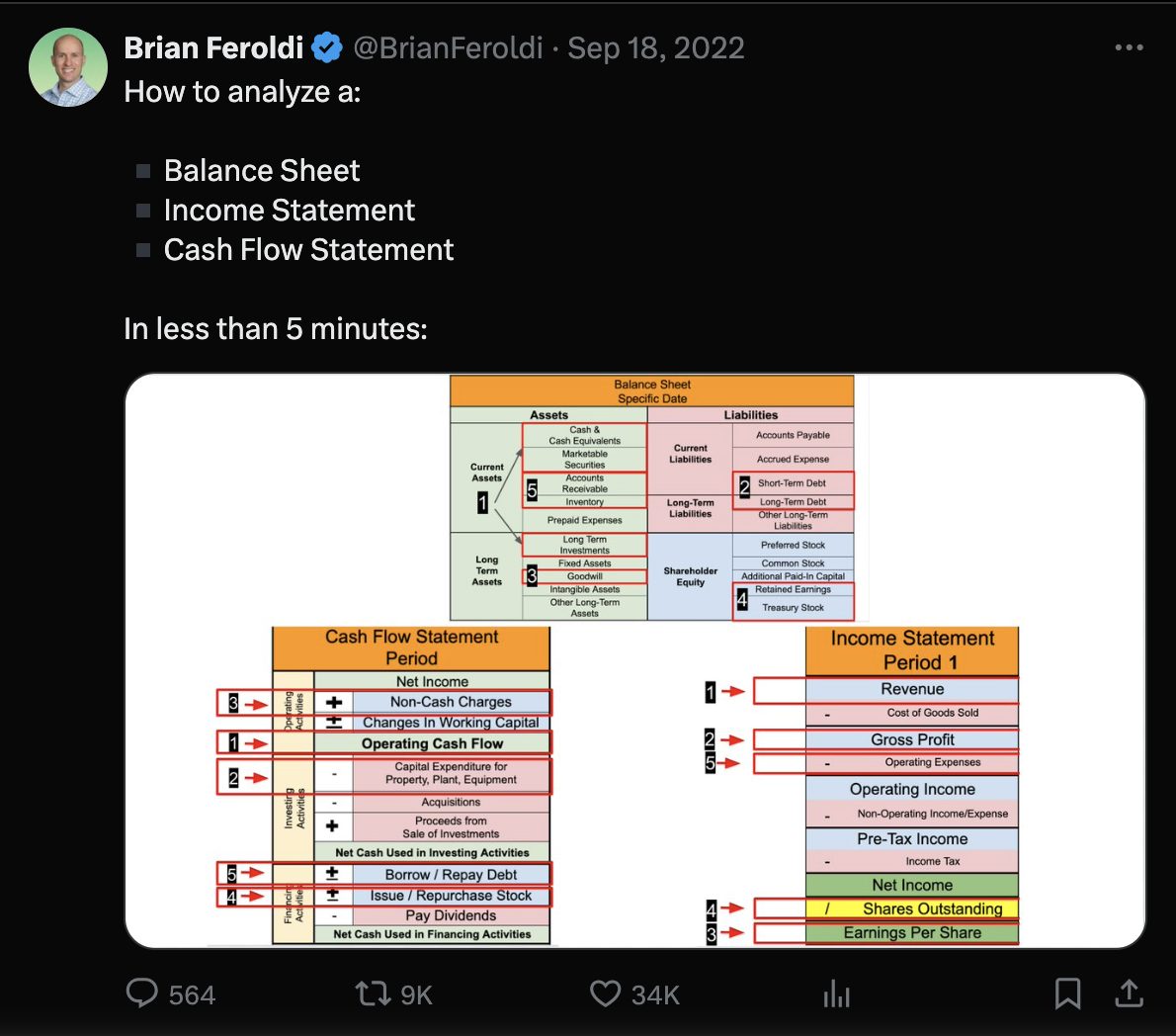
For Brian, that was Twitter/X, where investors were already gathering to talk stocks. He got lucky that his instinct matched the right platform, but the point is to pick one and learn it deeply before moving on.
“If you are really starting from scratch, it is far better to be excellent at one platform than horrible at 10 platforms,” Brian said.
Once you have a repeatable system on that first platform — content that consistently gets traction — then you can carry those lessons to a second platform and start experimenting there.
He also noted that content often needs to be reformatted, not just repurposed. A text-heavy post that crushes on X might need to become a slideshow or short reel for Instagram. The core idea travels; the format has to adapt.
Why Brian Is Going All-In on YouTube
Today, Brian has most of his other platforms in maintenance mode. His primary focus is YouTube, and he has a clear reason for it.
YouTube combines two things that written platforms can’t:
- discoverability through SEO
- and deep audience connection through video.
He pointed out that podcast listeners often consume dozens or hundreds of hours with a host, building a strong sense of trust and familiarity. YouTube can create a similar dynamic — something a tweet or LinkedIn post just can’t replicate.
Brian also mentioned the shelf life advantage. A YouTube video might launch with a “10 out of 10” ranking (meaning it’s the least popular of his last 10 videos), but the algorithm can find it months or years later and turn it into a top performer.
Tweets, by contrast, are mostly dead within 24 hours.
His strategy is to target content that is both timely and timeless, an idea he credits to author Ryan Holiday. He puts the year in titles (like “Investing for Beginners 2026”) to capture current searches, then removes the date later to keep the video relevant long-term.

His best-performing video of all time (1.7 million views) is about how Warren Buffett analyzes a balance sheet, a topic that resonates with investors, managers, and entrepreneurs alike.
Why Platform Ad Revenue Isn’t the Answer
Most people assume YouTubers make their money from the ads that run on their videos. Brian is direct about this: that’s “the bottom of the barrel” way to monetize an audience.
Even at a moderate scale, a video with 10,000 views might earn around $100 in ad revenue — maybe less.
But that same video, with a well-placed offer for a product you created and own? It could generate $1,000, $2,000, or more in direct sales. The comparison isn’t close.
The mindset shift is simple: instead of renting your audience to advertisers, sell your own products directly to the people who already trust you.
The $300/Day Funnel: How It Works
Brian’s funnel has four main stages: free content, email opt-in, tripwire offer, and backend sales. Here’s how each one fits together.
Step 1: Free Content That Gets Attention
Brian posts short-form content across platforms — infographics, quick takes, and educational visuals about investing. He uses HypeFury to automate and recycle his best tweets on a roughly 45-day cycle.
When a tweet hits a threshold of about 50 likes, HypeFury automatically drops a link to his lead magnet in the replies.
Step 2: The Email Opt-In
The lead magnet is a free ebook containing 10 of his most popular investing infographics. The landing page — built on Kit — has one job: collect an email address.
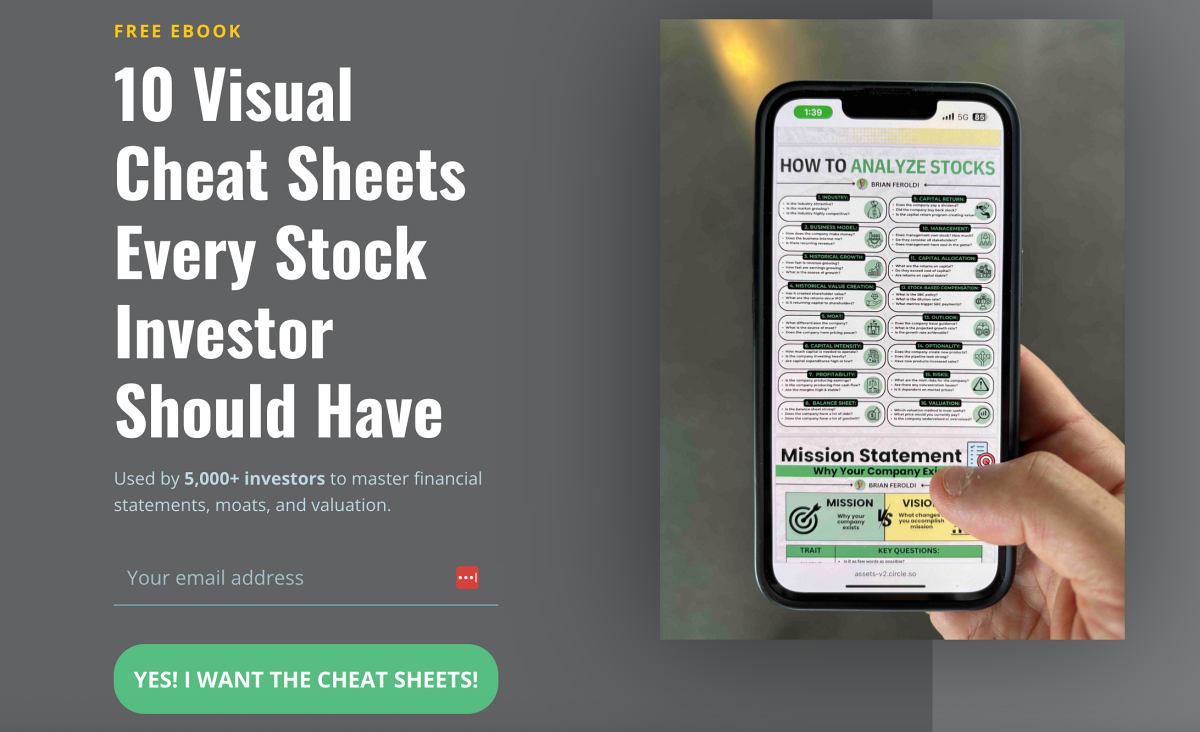
There are no distractions, no other links, just the offer and an opt-in field.
The result? A 72% conversion rate on that page. Over 5,000 investors have downloaded it.
Step 3: The $7 Tripwire Offer
The moment someone opts in, before they’ve even checked their inbox, they’re presented with a one-time offer: the full collection of 100 infographics for just $7 (normally $49).
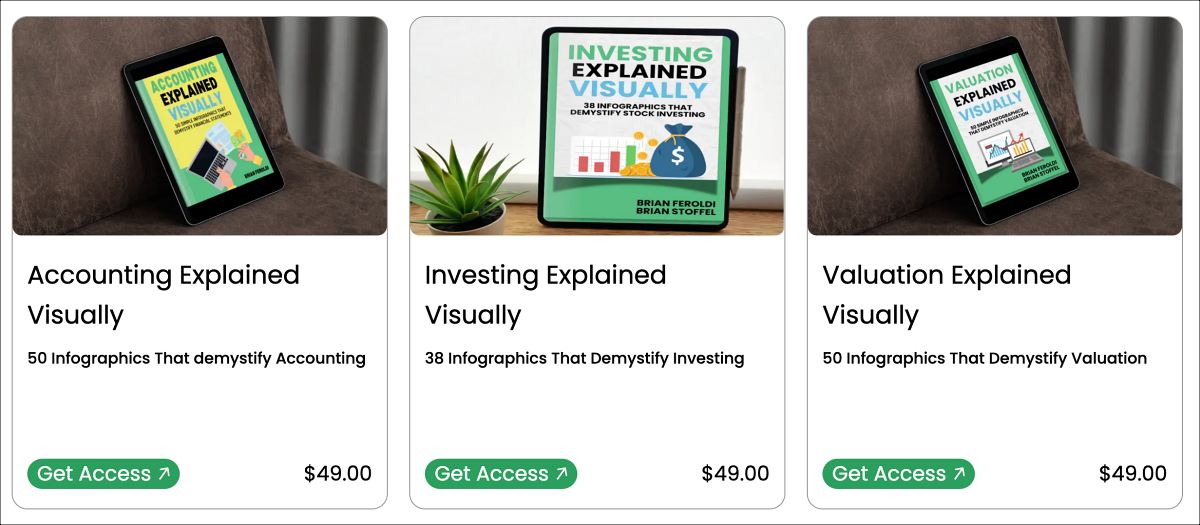
The sales page is packed with testimonials, FAQs, and a visual showing what they’re getting.
Checkout options include credit card, PayPal, Google Pay, and Apple Pay — handled through Spiffy, the shopping cart Brian uses. There’s also a 30-day, no-questions-asked money-back guarantee.
Step 4: Upsells at Checkout
On the checkout page, Brian offers two mini courses — one on analyzing a company’s competitive moat, another on reverse discounted cash flow — each normally $80 but discounted to $20-$27 as add-ons.
The goal isn’t to squeeze maximum dollars up front; it’s to identify paying customers as early as possible.
The Numbers Behind the Funnel
Brian is transparent about the math. For every 100 people who give him their email address:
- About 3-4% become paying customers through the funnel
- The average purchase value is around $17 (with upsells factored in)
- That works out to roughly $50-$60 per 100 email subscribers — essentially getting paid to build your list
A “bad” funnel converts about 0.5% into customers.
A top-tier funnel hits 7%.
Brian’s sits in the 3-4% range, which he considers solid. And the entire traffic source, at least for now, is organic — no paid ads driving the funnel yet, though he sees that as the logical next step once the system is fully dialed in.
The Mindset Shift Around Selling
Brian was resistant to charging for anything for a long time. He said all the fears creators have about “bothering” their audience with an offer are “completely fake and exist in the creator’s head.”
His analogy: when you check out at the grocery store and there’s gum by the register, you’re not mad at the store. It’s just an offer. That’s the mindset to bring to a funnel like this.
He delivers exactly what he promised — the free ebook lands in their inbox — and only inserts an optional offer along the way.
He’s also serious about the refund policy. He has refunded people on $7 purchases with zero questions asked. Making it easy to buy and easy to get a refund removes friction on both ends.
The Follow-Up Sequence and Email Strategy
After someone opts in, Brian sends them through a free 5-day email course that teaches the principles behind the infographics like:
- what’s the difference between a stock and a bond
- how to read financial statements
- what moats are
It’s pure educational value, delivered once a day for five days.
At the end of that sequence, if someone hasn’t purchased anything, he pitches the $7 ebook again.
After that, subscribers move into his two regular newsletters: a hand-curated investing newsletter that goes out every Wednesday (called Long Term Mindset), and an evergreen newsletter on Saturdays covering stock investing fundamentals — a full 52-email sequence written in advance.
That means Brian is in his subscribers’ inboxes at least twice a week with useful content, staying top of mind for when they’re ready to buy his $200 Stock Simplifier course — a course, AI prompts, and checklist for analyzing companies from start to finish.
Live Webinars as a Trust-Building Tool
One of the most powerful tools Brian uses to warm up his audience for the $200 offer is the private webinar.
He invites email subscribers to live sessions where he and his business partners research a stock from scratch over the course of an hour — showing exactly how they think as investors, answering questions in real time.
People who attend (or watch the replay) get to see Brian’s face, hear his voice, and watch him work. It builds the kind of trust that email alone can’t. And once people know and trust you, they’re far more likely to become customers.
Start with the End in Mind: Building Your Own Funnel
Brian’s advice for any creator trying to map out their own funnel is to start with the end in mind.
- What is the main product you want to sell at the highest price point? (For him, it’s a $200 course and tool. Work backwards from there.)
- What’s a piece of that course you can sell as a $27 mini course?
- What’s a sampler of that mini course you can offer for $7?
- And what’s a free version of that $7 thing you can offer as a lead magnet? (That’s your funnel — from free content to paid offer, all tied together by the same topic and audience.)
The key is continuity.
For Brian, the chain looks like this:
- Social infographics about investing
- Free ebook with 10 infographics
- $7 bundle of 100 infographics
- $20-27 mini‑courses on specific investing skills
- $200‑dollar Stock Simplifier course
Every step naturally leads to the next. The content you create, the lead magnet you offer, and the products you sell all need to be directly related.
Cheyenne Bulloch is a parallel example in a completely different niche. Her social content shares housekeeping tips, her lead magnet is a free sample “cleaning audio” episode, and the paid subscription is the natural next step for people who enjoy that format.
Brian also mentioned ScoreApp, an AI-powered quiz tool that lets you create personalized scoring experiences.
It could be a useful lead magnet for niches where a quiz format fits well — like helping someone figure out which side hustle is right for them.
Tools/Tech
- HypeFury – automates tweet recycling and auto-posts lead magnet links when tweets hit a set engagement threshold
- Kit – email collection, landing pages, and email sequence delivery
- Spiffy – checkout software with multiple payment options and upsell capabilities
- Circle – course delivery, live webinars, and premium community hosting
- ScoreApp – AI-powered quiz and scoring tool for lead generation
Biggest Surprise
Brian didn’t set out to build a business. He was a writer at The Motley Fool in 2019, just sharing investing posts on Twitter because he enjoyed it.
The audience grew, and he stumbled into the idea that this could actually make money.
His first attempt at monetization wasn’t even a real offer. He set the price of his content at zero but added a tip jar.
That first day, he made $2,000 in tips from an audience that had been consuming his free content for over 18 months and was looking for a way to say thank you.
He’s since dropped all the mental blocks around charging. The creator who gives everything away for free isn’t doing their audience a favor — they’re just leaving money on the table.
What’s Next for Brian?
Brian is deep into the AI space right now.
He’s building an AI-powered product designed to dramatically speed up the stock research process — helping individual investors analyze companies faster and more thoroughly.
He expects it to launch within the next month or two.
Brian’s #1 Tip for Side Hustle Nation
“Just get started.”
Where should I send it? You'll also receive my best side hustle tips and weekly-ish newsletter. Opt-out anytime.Get Your Free Funnel Building Worksheet
Episode Links
- LongTermMindset.co
- Why Does the Stock Market Go Up?
- Ryan Holiday
- YouTube: Warren Buffett: How To Analyze a BALANCE SHEET
- $200 Stock Simplifier course
- Cheyenne Bulloch on The Side Hustle Show
- HypeFury
- Kit
- Spiffy
- Circle
- ScoreApp
Looking for More Side Hustle Help?
- Download The Side Hustle Show. My free podcast shares hundreds of side hustle ideas to make extra money.
- Start Your Free $500 Challenge. My free 5-day email course shows you how to add $500 to your bottom line.
- Join the free Side Hustle Nation Community. The free Facebook group is the best place to connect with other side hustlers and get your questions answered.

The award-winning Side Hustle Show is the #1 side hustle podcast
with over 1,300 5-star ratings!

Listen in your favorite podcast app or directly in your browser.