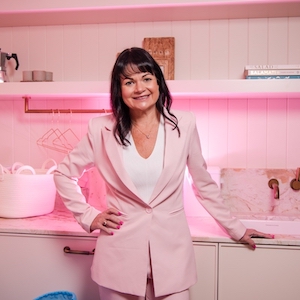
What if the pile of laundry sitting in your spare room was actually a business idea in disguise?
That’s more or less how Susan Toft tells it. She was a new mom with a full-time corporate job, staring at a mountain of unfolded clothes and thinking: someone should offer this as a service.
So she decided to be that someone.
Susan is the founder of LaundryLady.com, Australia’s number one mobile laundry service. She started solo in 2012, doing pickups in her van with her toddler in the backseat.
Thirteen years later, she’s running a $12 million business with 450+ contractors across Australia, a presence in New Zealand, a new launch in Canada, and expansion into the UK on the way.
Along the way, she landed a $1 million investment offer on Shark Tank Australia.
Tune in to Episode 725 of the Side Hustle Show to learn:
- how Susan validated her idea using a personal pain point and turned it into a scalable service
- what the contractor model looks like and how much laundry ladies and lads actually earn
- how Shark Tank changed her business trajectory and what she did with the exposure
The Personal Pain Point That Started It All
Susan was working in a demanding corporate career when she became a mom.
She wasn’t particularly domestic — her own words — but the laundry in her spare room had become a daily source of stress. She’d rummage through piles of clean, unfolded clothes every morning just to find something to wear.
The flip from frustration to business idea came from a simple question: if this is a pain point for me, isn’t it a pain point for other busy families too?
From that, the Laundry Lady was born, a pickup and delivery laundry service designed for people who value their time and just want the pile gone.
How Susan Got Her First Laundry Customers
Susan had a friend build her a website, turned it on, and got her first customer. In the early days, she did everything herself using her home washer and dryer.
- pickup
- wash
- dry
- fold
- delivery
On the customer acquisition side, Google Ads made things surprisingly easy early on.
When she started 13 years ago, clicks for laundry-related searches cost around 20 cents. There was almost no competition, so showing up in search was cheap and effective.
Getting customers was never the problem. The ceiling was her own washing machine.
She ran the business as a solo operator for the first five years. Then life forced a change: she went through a divorce and had to return to full-time work.
To keep the business going, she had to bring on her first contractors.
Building a Scalable Laundry Business with Contractors and an Online Booking System
The shift from solo operator to contractor model required a reliable online booking system. Susan applied for a government grant in Australia to fund it, then went to a developer with her vision: an “Uber-style booking platform.”
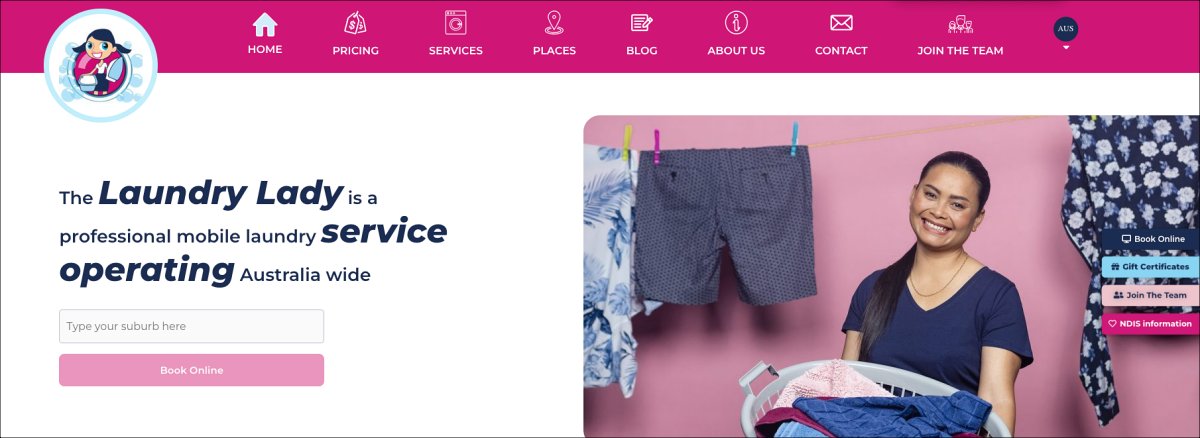
Her budget? $5,000.
The developer laughed and told her to find something off the shelf. She did, and her developer integrated it into the website with enough customization to handle multiple locations and contractors.
It wasn’t perfect, but it worked, and that became version 2.0 of the business.
For finding contractors, she started with her personal network — a friend’s sister, then her sister — and posted on Gumtree, which Susan says is the Australian equivalent of Craigslist.
She was specifically looking for people who shared her situation: moms or parents who needed flexible work that fit around school pickups and family life. Her first batch of eight to ten contractors were all in Southeast Queensland.
Why the Demand for Outsourced Laundry Keeps Growing
Susan tapped into a genuine shift in how households think about their time. As people get busier and start placing a higher value on their hours, chores like laundry are increasingly being outsourced.
The customer base reflects this. About 60% are residential:
- busy families
- professionals
- people living with disabilities
- elderly clients
The other 40% are business customers:
- beauty salons
- medical clinics
- Airbnb operators with low-to-mid-volume laundry needs that bigger commercial operators won’t touch.
As Susan put it, the problem is never going away. Clothes keep getting dirty. The total addressable market is enormous, and the Laundry Lady sits in a space that’s easy to use (book online, get a pickup) and genuinely useful for a wide range of customers.
Laundry Lady Contractor Pay and Business Unit Economics
The average customer spends $100 per service and books on a weekly or fortnightly basis, making it a highly recurring revenue model.
Contractors keep 80% of every job they complete. The company takes 20%, which goes entirely back into digital marketing and platform development.
Contractor earnings range from $300 to $3,000 per week depending on how much they take on. The average sits around $1,500 to $2,000 per week.
Some use it as a side hustle while studying or building something else. Others go full-time once they see what’s possible.
The model is designed for flexibility. Contractors decide their own hours, how large an area they want to cover, and how many pickups they do per day. There’s no exclusive territory — multiple contractors can operate in the same suburb, which actually helps drive faster growth in those areas.
New contractors typically take three to six months to build a full schedule. But because customers are so sticky and rarely cancel, even adding one new recurring customer per week compounds quickly.
How the Laundry Lady Drives Traffic and New Customers
All digital marketing is run centrally by head office. The team uses targeted paid search and social advertising, calibrated to the specific areas where contractors are active.
There’s no point marketing in a suburb until there’s a contractor ready to take bookings there.
On the ground, contractors support this with local outreach. They receive branded materials at onboarding and are encouraged to mail-drop their area and connect with nearby businesses.
The combination of centralized digital spend and local contractor hustle tends to get new areas growing faster.
Why the Laundry Lady Chose a Contractor Model Over Franchising
Susan deliberately avoided a franchise structure. Franchises require territory fees and volume commitments that would price out the exact people she wanted to bring in — moms and parents who want a flexible way to earn without a big upfront investment.
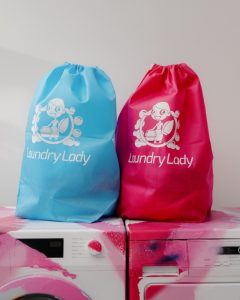
Instead, the model runs more like Uber. Contractors are independent, sign up with an onboarding fee that covers training and starter materials:
- branded bags
- hangers
- brochures
- car magnets
And then they start earning commissions once they take their first bookings.
In Australia, some suburbs now have 10 to 20 contractors operating in the same area. Rather than cannibalizing each other, it tends to accelerate growth — more coverage means faster customer fulfillment and better responsiveness.
How Shark Tank Australia Transformed the Laundry Lady
Susan applied for Shark Tank Australia on a whim, before she could talk herself out of it. Her application was accepted, and she flew to Sydney to film what she called “the most nerve-wracking experience of my life.”

At the time, the business had $3.8 million in revenue and around 200 contractors — more established than most Shark Tank Australia participants.
Robert Herjavec, who also appears on Shark Tank US and Dragon’s Den Canada, made a $1 million investment, which Susan describes as a record for the Australian show. One of the other sharks even mentioned that his friends were already using the service and raving about it.
The money mattered, but the exposure mattered more. Contractor applications jumped from around 100 a week to over 500 in a single week. The website crashed. And years later, a meaningful percentage of new applicants still mention Shark Tank as how they first discovered the brand.
That credibility is now carrying over into new markets. Because Canadians recognize Robert, the Shark Tank clip is proving useful in early-stage marketing as the brand expands internationally.
Tools & Tech
The off-the-shelf booking system that got the business started eventually hit its limit around 200 contractor locations. At that point, Susan’s team rebuilt the platform from scratch — a custom system with dedicated apps for both customers and contractors. Building it was, in her words, “never-ending and very expensive.”
The team is now investing more on the customer-facing side of the app. Early development was focused on giving contractors the tools they needed. Now the priority is improving the customer experience to support continued growth.
On the AI side, the team uses ChatGPT, Claude, and Gemini for customer support, contractor training, marketing, and day-to-day operations. Susan said she wishes these tools had existed when she started 13 years ago.
The business also runs its own podcast, The Spinout, aimed at entrepreneurs (particularly women) and the contractor community.
A Day in the Life of the Laundry Lady CEO
Susan’s days are rarely the same. She records podcast episodes, attends speaking engagements, and travels to events. She’s heavily involved in marketing and growth and spends a lot of time in back-to-back team meetings.
She stepped back from day-to-day customer support about two years ago, once the team was large enough to handle it. She also records training materials and messaging for contractors as the network expands.
Outside the business, she’s a mom of two boys. Her oldest (16) occasionally helps in the warehouse when suppliers come in. Her youngest prefers to be a customer — dropping his laundry in the bag and getting it back folded the next day.
Biggest Surprises Running a Fast-Growing Laundry Business
The most common frustration Susan describes isn’t a mistake so much as a reality: things always take longer than you expect. When you’re in the day-to-day grind, progress feels invisible. She recommends stopping once a year to genuinely look back at how far you’ve come — and sharing that reflection with your team, who are even deeper in the grind than you are.
It’s a practice that’s helped her stay grounded. Between Shark Tank and today, revenue has grown from $3.8 million to $12 million, roughly tripled the business in just two to three years.
Day to day, that growth is hard to feel. Zoomed out, it’s impossible to miss.
What’s Next for the Laundry Lady?
Canada launched at the start of the year, starting with two provinces and the first 10 contractors up and running. Applications have been strong, and the team is working carefully to match contractor supply with customer demand before expanding to more provinces.
The UK is next. After that, the US — specific states initially, given the size of the market. Susan mentioned they want more backing in place before tackling it.
In Australia, the focus is on maintaining and accelerating growth in an already established market, while continuing to invest in the tech platform. The goal is getting both the customer app and contractor system to the next level of capability.
Susan’s #1 Tip for Side Hustle Nation
“Go and be part of an accelerator program.”
Looking for More Side Hustle Help?
- Download The Side Hustle Show. My free podcast shares hundreds of side hustle ideas to make extra money.
- Start Your Free $500 Challenge. My free 5-day email course shows you how to add $500 to your bottom line.
- Join the free Side Hustle Nation Community. The free Facebook group is the best place to connect with other side hustlers and get your questions answered.

The award-winning Side Hustle Show is the #1 side hustle podcast
with over 1,300 5-star ratings!

Listen in your favorite podcast app or directly in your browser.