 What if you could turn a single dollar into $5,000 in under a month? That’s exactly what happened to Mindy, a member of Shannon Jean’s reselling mastermind community.
She bought two pallets of books from a government auction for $1 total, discovered they were packed with medical and curriculum books selling for $200 to $400 each, and turned that dollar into $5,000 within about a month.
Deals like that are hiding in plain sight — on government auction sites and retail liquidation platforms that most people have never heard of.
Shannon Jean has been buying and flipping products this way for decades, and in this episode he walks through exactly how it works.
Shannon is a serial entrepreneur, bestselling author, and creator of the $5 Reseller Mastermind, a community that has grown to more than 3,000 members over the past year.
His motto: “Buy with math, sell with emotion.”
Tune in to Episode 731 of the Side Hustle Show to learn:
- where to find government and retail liquidation auctions and how to get registered
- why your selling system matters more than finding great deals
- how to research before you bid so you never buy blind
(Get the auction starter guide at shannonjean.com/auction)
Sponsors
- Indeed – Start hiring NOW with a $75 sponsored job credit to upgrade your job post!

- Quo (formerly OpenPhone) — Try it for free!

- Shopify — Sign up for a $1 per month trial!

- Gusto — Get 3 months free of the leading payroll, benefits, and HR provider for modern small businesses!

Why Liquidation Deals Exist (And Why the Prices Are So Low)
The first question most people ask is: why would Costco let $27,000 worth of furniture go for around $1,000?
Shannon’s answer: It’s a space problem, not a money problem.
When he tours supplier warehouses, the message is always the same: “We have to get this stuff out.” More product is coming in, and the old inventory has to be gone by Friday.
Big retailers like Costco, Target, and Walmart also have environmental motivations — they’d rather see product resold than end up in a landfill.
That urgency is your opportunity. The prices are low not because the products are worthless, but because nobody’s running a real marketing campaign to sell them.
They just need it gone.
Where to Find Auction and Liquidation Deals
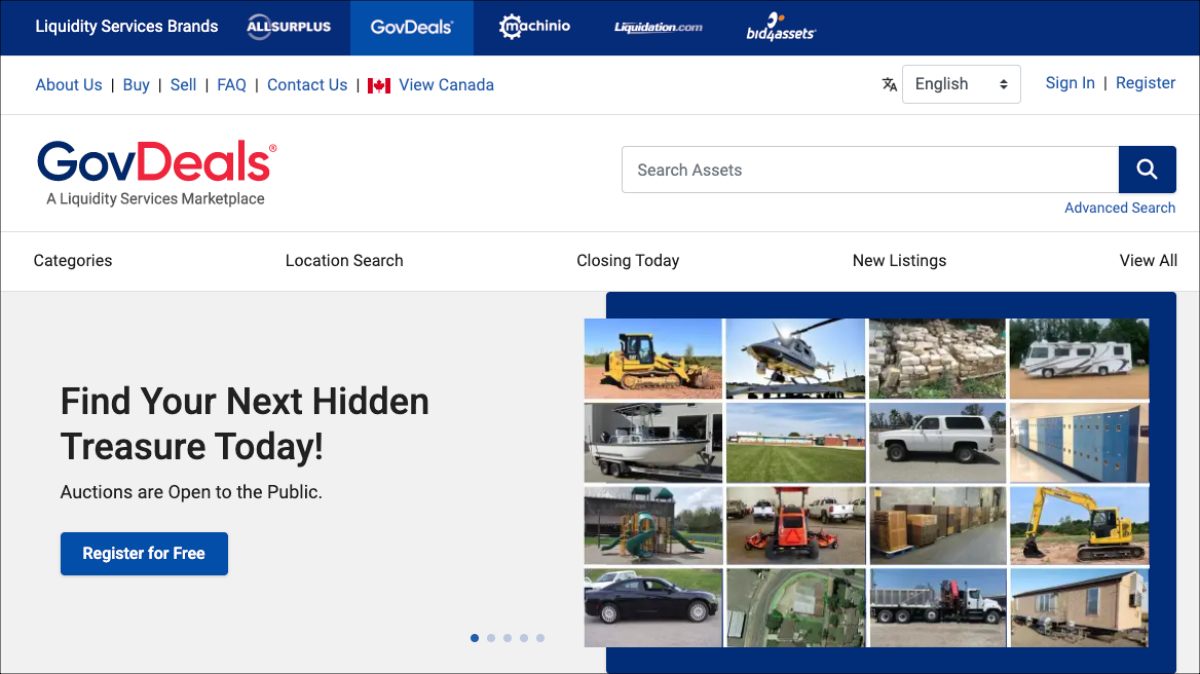
There are more auction sites out there than most people realize. Shannon’s go-to platforms include:
- B-Stock: retail liquidation from Costco, Target, Walmart, Lowe’s, Petco, and 100+ other suppliers
- GovDeals: government surplus from cities, counties, and state agencies
- Municibid: another strong municipal auction platform
- GSA Auctions: federal government sales, everything from lab equipment to real estate to planes
Shannon also loves local county and city auctions — they’re often contracted out to smaller auction companies and don’t get much promotion, which means less competition and better prices.
He recommends using AI to search for local auctions in your area rather than a regular search engine.
He keeps a free list of auction sites organized by state at shannonjean.com/auctions. It’s a good place to start.
Build Your Selling System Before You Buy Anything
Here’s Shannon’s most counterintuitive advice: when new members join his mastermind, the first thing he tells them is don’t buy anything. Stop. The deals are everywhere… but that’s not the hard part.
“Where people fail is they don’t have a system,” he says. The product isn’t what makes you successful. The system you build to sell the product is.
Before you bid on a single lot, Shannon recommends:
- Sell items you already own on Facebook Marketplace or eBay first
- Figure out if you actually enjoy this kind of work: customer questions, shipping, returns, all of it
- Learn the platforms before your money is on the line
Once you’re ready to start sourcing, steer toward what Shannon calls “boring products” — rugs, outdoor furniture, or Blackstone grills. No moving parts, easy to assess condition, and people actively want them.
Avoid electronics to start. They have low margins and too many things that can go wrong.
He also emphasizes targeting higher price points as you improve. Selling a $100 item takes about as much work as selling a $10 item — but the margin and the customer experience tend to be better at the higher end.
Learn on cheaper items so your inevitable early mistakes don’t cost you much, then scale up into products with bigger returns.
Seasonal items are another overlooked opportunity. The best time to buy Christmas trees is right after Christmas — that’s when Costco returns them, and they show up at auction for almost nothing. Buy now, sell in November.
How to Research a Deal Before You Bid
Shannon’s cardinal rule: never buy anything unless you already know what you can sell it for. This is what he means by “buy with math.”
Most auction lots come with a manifest — a spreadsheet listing every item, with UPCs, quantities, and often retail prices.
Here’s his research process:
- Download the manifest and upload it to an AI tool like Perplexity or Claude to get fast feedback on current market value
- Cross-reference on Facebook Marketplace and eBay’s free product research tool (three years of sold data, no charge)
- Check both price AND velocity — if something only sells once a month, you can’t buy 1,000 units
- Use proxy bidding: set your max price based on the math, place your bid, and walk away
Don’t watch the auction. That’s where emotions take over and people overbid.
As Shannon puts it: if you’re losing most of your auctions, that’s a sign you’re bidding correctly. Expect to bid on 20 auctions to win two or three.
One small trick is to use odd numbers for your max bid — something like $2,015 instead of $2,000 — to edge out competitors who round to the same ceiling.
And a firm rule: don’t buy mystery pallets. Don’t buy anything without a manifest.
There’s no reason to roll the dice when better-documented deals are available every single day.
How to Sell What You Buy
Once you have inventory, the main selling platforms are:
- eBay: great for searchable items with established market pricing
- Facebook Marketplace: ideal for large, local items like furniture and appliances
- Whatnot and TikTok: live selling platforms growing fast
- Poshmark, Vestiaire, and StockX: best for apparel and luxury goods
Shannon is especially excited about live selling. On platforms like Whatnot, you can have a pallet behind you, grab items one by one, and auction them off in seconds. No individual photos, no listing uploads.
Members of his mastermind have sold $1,000 worth of product in a single hour this way. One live seller in the community has moved more than $300,000 in product so far this year.
He has a whole section of the mastermind dedicated to live selling at shannonjean.com/live.
A quick note on taxes: platforms like eBay, Whatnot, and Poshmark collect and remit sales tax on your behalf, which simplifies your quarterly filing. For sales on Facebook Marketplace, you’ll need to factor tax in yourself.
Finding Your Unfair Advantage
Shannon comes back to this phrase throughout the conversation: “unfair advantage.” What do you have that other resellers don’t?
Your edge could be:
- Storage space: access to a warehouse or storage unit opens up furniture and appliance lots most garage sellers can’t touch
- Shipping capability: one reseller I know does freight shipping, opening bulky industrial equipment to a nationwide audience on eBay
- Specialized knowledge: knowing what a product is, who buys it, and what it’s worth when nobody else does
- Local market access: being an hour from the nearest Costco is a real advantage if you’re stocking similar products
One mastermind member focused entirely on pressure washers and is approaching $200,000 in sales.
Another started selling from a self-storage unit, moved to a closed gas station, then took over an abandoned Sears store — and now runs what amounts to a mini Costco for people in his area who don’t want to drive an hour.
Shannon also says: follow your curiosity. He sells outdoor furniture in part because his wife runs vacation rentals and always needs new patio chairs and barbecues.
That built-in use case keeps him motivated.
As he puts it, “It’s a simple business, but it’s not easy. There’s no passive income here. If you don’t like getting your hands dirty, don’t do this.”
Mistakes and Surprises
Shannon’s biggest cautionary tale: two pallets of gas leak detectors.
He figured safety equipment had to be valuable, bought them without doing the research, and quickly learned why they were at auction — the units fall out of compliance after a certain period and can’t be resold as functional safety equipment. He spent $2,000 to $3,000 and couldn’t sell a single one.
On the same trip, he got a deal right. He found pallets of anode rods — the metal bars inside water heaters that attract rust. Nobody knew what they were. He made a quick phone call, found a buyer on the spot, bought them for $0.25 each, and sold them for $4 each, netting $4,000 to $5,000.
The contrast captures the whole philosophy. The gas detectors were bought on gut feeling. The anode rods were essentially pre-sold before he committed.
How Shannon Built a $3.7 Million Handbag Business
Shannon has always sold functional, tech-adjacent products. So one day he decided to try something completely opposite: luxury handbags. He went in expecting to sell 10 bags a day at $50 profit each, working about an hour a day.
But that’s not what happened. What he found instead was that he could sell one bag a day and make $500. He built a system around that model and scaled it over time — just him, four racks next to his desk — and over three and a half years sold $3.7 million worth of bags, netting about $557,000 in profit.
His tip: buying damaged bags. Most buyers wouldn’t touch them, so Shannon could outbid everyone on high-end inventory from Japanese auction houses. His customers didn’t care about the damage — they still got to carry a luxury brand, and most people assumed wear came from years of use.
Less competition on the sourcing side meant better margins on the selling side.
The lesson he draws from it is to always look for the thing that makes you different. What can you source that other resellers overlook or avoid?
What’s Next for Shannon?
Shannon is focused on growing the mastermind from 3,000 to 10,000 members, and launching private cohorts for more advanced resellers who want intensive support.
He’s also been expanding his content on YouTube and Instagram after building an initial following of 51,000 on X.
You can join the $5 Reseller Mastermind at ShannonJean.com/mastermind.
Shannon’s #1 Tip for Side Hustle Nation
“Take action. The work reveals itself to you as you take action.”
Episode Links
- $5 Reseller Mastermind
- ShannonJean.com
- Shannonjean.com/auctions
- Shannonjean.com/live
- B-Stock
- GovDeals
- Municibid
- GSA Auctions
- Manifest
- Perplexity
- Claude
- eBay’s free product research tool
- eBay
- Facebook Marketplace
- Whatnot
- TikTok
- Poshmark
- Vestiaire
- StockX
- Pallet Flipping: How We Made $25k Flipping Liquidation Pallets
- The 37 Best Items to Flip for a Profit: $50-5,000 a Month Part-Time
- How to Unlock New, Personalized Side Hustle Ideas with AI
- 20 Ways to Make Money on Facebook … without Selling Your Soul
- How to Make Money on eBay: $750-$3000 a Month Flipping Items Part-Time
Looking for More Side Hustle Help?
- Start Your Free $500 Challenge. My free 5-day email course shows you how to add $500 to your bottom line.
- Join the free Side Hustle Nation Community. The free Facebook group is the best place to connect with other side hustlers and get your questions answered.
- Download The Side Hustle Show. My free podcast shares how to make extra money with actionable weekly episodes.

The award-winning Side Hustle Show is the #1 side hustle podcast
with over 1,300 5-star ratings!

Listen in your favorite podcast app or directly in your browser.